
What Is Scandinavian Mid-Century Modern?
- A Guide to the Style
Scandinavian mid-century modern remains one of the most influential and enduring styles in the world of interiors. More than seventy years after its golden era, original furniture and lighting from Denmark, Sweden and Finland continue to be sought after by collectors, architects and design enthusiasts around the world.
The appeal is easy to understand. Scandinavian mid-century modern combines clean lines with warmth, craftsmanship and practical functionality. Unlike many modern styles, it feels refined without being formal and timeless without appearing old-fashioned.
At Scandinavia Modern, we specialise in authentic vintage Scandinavian furniture, lighting and art from the mid-20th century. This guide explores what defines Scandinavian mid-century modern style, how it shaped interiors, the makers behind some of its most important lighting, and why authentic examples are becoming increasingly collectible.
What Is Scandinavian Mid-Century Modern?
The term Scandinavian mid-century modern generally refers to furniture, lighting and decorative objects produced from the 1940s through the 1970s.
While Denmark, Sweden and Finland each developed their own design traditions, they shared a common philosophy: objects should be beautiful, functional and made to last.
Natural materials such as teak, rosewood, oak, brass and quality textiles played an important role, while designers focused on balanced proportions and thoughtful craftsmanship rather than unnecessary decoration.
This approach resulted in furniture and lighting that still feel remarkably contemporary today.
Key characteristics include:
• Clean, elegant lines
• Functional and practical forms
• High-quality craftsmanship
• Natural materials
• Warm wood tones
• Sculptural lighting
• Timeless proportions
• Attention to detail
Perhaps the greatest strength of Scandinavian mid-century modern style is that it adapts easily to different interiors. A Danish teak sideboard, a Swedish pendant lamp or an original mid-century painting can work equally well in a period home or a contemporary apartment.
Scandinavian Mid-Century Modern Interiors
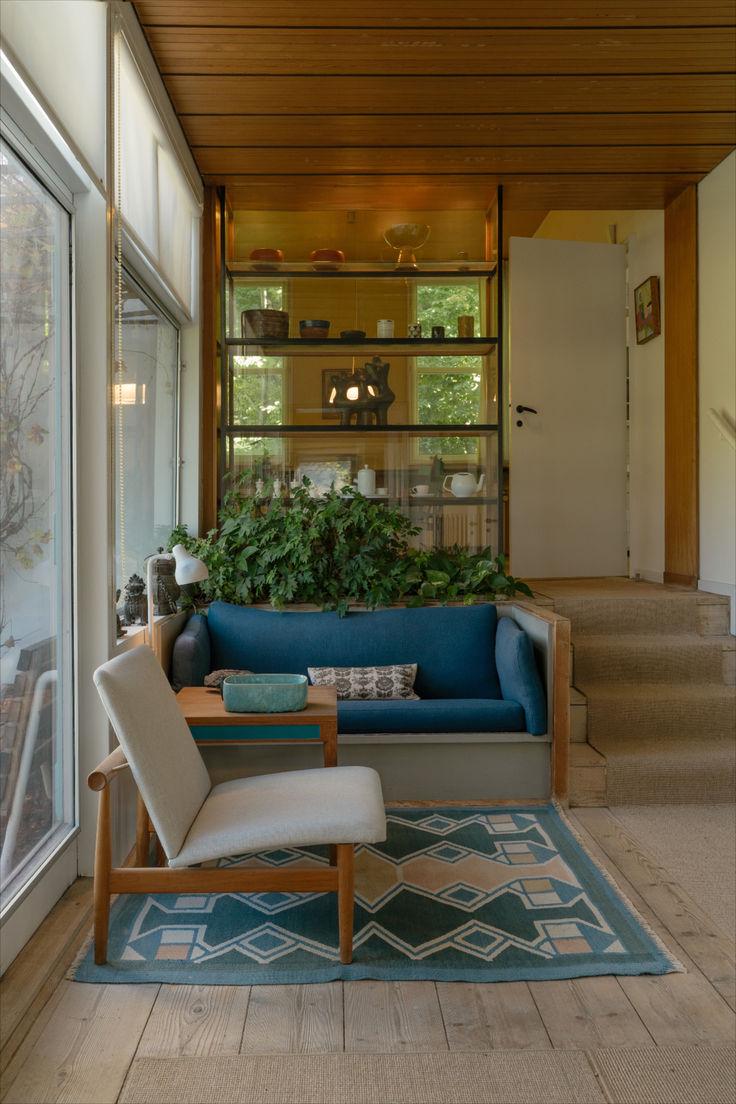
Scandinavian mid-century modern interiors are defined by balance rather than excess. Furniture, lighting and art are carefully combined to create spaces that feel warm, functional and visually calm.
Natural wood is often an important foundation. A teak sideboard, dining table or cabinet can introduce warmth, while sculptural lighting adds another layer of character. Original artwork, ceramics, textiles and carefully chosen decorative objects can then give the interior a more personal expression.
The key is not to recreate a 1950s or 1960s room exactly. The most successful Scandinavian mid-century modern interiors combine authentic vintage pieces with contemporary surroundings.
A single exceptional vintage pendant can become the focal point of a modern dining room. A Danish sideboard can add warmth to a minimalist interior. A Swedish mid-century lamp or original painting can introduce character without overwhelming the space.
This ability to blend naturally with contemporary interiors is one of the reasons Scandinavian mid-century modern remains so relevant today.
Scandinavian Mid-Century Furniture
Vintage Scandinavian furniture is particularly admired for its quality and construction.
Cabinets, sideboards, dining tables, desks and chairs from the mid-century period were often produced with exceptional attention to detail. Well-made joinery, carefully selected veneers and elegant proportions distinguish original pieces from later mass-produced furniture.
Teak became one of the most widely used materials, especially during the 1950s and 1960s. Its warm colour and attractive grain suited the Scandinavian preference for natural materials and understated elegance.
Rosewood, oak and walnut were also frequently used, depending on the period and manufacturer.
Danish furniture became internationally known for its exceptional craftsmanship and refined use of wood, while Swedish furniture developed its own distinctive combination of simplicity, practicality and elegant form.
Danish and Swedish Mid-Century Design history
Denmark and Sweden played a central role in establishing Scandinavian mid-century modern internationally.
Danish designers became particularly renowned for furniture that balanced comfort, function and visual lightness. Designers including Hans J. Wegner, Finn Juhl, Børge Mogensen, Arne Jacobsen and Poul Kjærholm helped establish Danish furniture as an international design language.
Swedish design developed along a somewhat different path, often placing greater emphasis on simplicity, practicality and carefully considered forms.
Both traditions produced furniture and lighting that remain highly sought after today.
Scandinavian Mid-Century Lighting
Lighting is one of the most distinctive and collectible areas of Scandinavian mid-century modern.
During the mid-20th century, Scandinavian designers and manufacturers paid great attention not only to the appearance of a lamp but also to the quality of the light it produced. Pendant lights, wall lamps, table lamps and floor lamps were designed as integral parts of an interior rather than simply functional necessities.
This resulted in some of the most recognisable lighting of the period.
Scandinavian mid-century lighting can range from restrained and architectural designs to highly sculptural pieces. Brass, aluminium, copper, lacquered metal and other carefully selected materials were used to create lighting with a strong visual presence.
Many original lamps were produced in relatively limited numbers, and surviving examples can be increasingly difficult to find.
Important Scandinavian Lighting Makers
Several manufacturers and design companies played an important role in the development of Scandinavian mid-century lighting.
LYFA
The Danish lighting manufacturer LYFA has a long history dating back to the early 20th century and became particularly associated with innovative Danish lighting during the mid-century period. Its catalogue includes designs by several important Danish designers and remains highly collectible.
Fog & Mørup
One of Denmark's best-known lighting companies, Fog & Mørup produced an extensive range of mid-century lighting and collaborated with prominent designers. Original Fog & Mørup lamps are particularly sought after for their distinctive Danish modern character.
Louis Poulsen
One of Denmark's most internationally recognised lighting companies, Louis Poulsen became closely associated with some of the defining designs of Danish modernism, including lighting developed in collaboration with Poul Henningsen.
Nordisk Solar
Another important Danish name, Nordisk Solar produced a wide range of lighting during the mid-century period and worked with several notable Scandinavian designers.
ASEA
The Swedish industrial company ASEA, later associated with ABB, was also involved in the production of lighting and electrical products. Vintage ASEA lighting is of particular interest to collectors of Swedish mid-century design.
Boréns
The Swedish manufacturer Boréns produced distinctive mid-century lighting, including designs that demonstrate the Swedish approach to functional yet sculptural illumination.
Nordiska Kompaniet (NK)
Stockholm's prestigious department store was an important force in Swedish design and retail. NK offered and commissioned furniture, lighting and other objects from leading Scandinavian designers and manufacturers, making NK-associated pieces especially interesting to collectors of Swedish design.
These manufacturers represent only part of the rich Scandinavian lighting tradition. For collectors, discovering lesser-known makers can be just as rewarding as finding the most famous names, particularly when an unusual design combines rarity, craftsmanship and strong visual character.
Scandinavian Mid-Century Art
Art was an important part of the Scandinavian mid-century interior.
Paintings, prints and sculptural works were often used alongside furniture and lighting to create interiors with personality and individuality.
Scandinavian mid-century art ranges from abstract and geometric compositions to expressive figurative works and more restrained modernist pieces.
For collectors, signed original works can offer an opportunity to bring something genuinely individual into an interior.
An original mid-century artwork also has a quality that mass-produced decoration cannot replicate: its own history, surface, character and place within the period in which it was created.
Collecting Scandinavian Mid-Century Modern as a Long-Term Investment
Authentic Scandinavian mid-century modern can also be viewed as a long-term collectible.
Unlike contemporary furniture, original pieces from the 1950s, 1960s and 1970s are no longer being produced. The number of surviving examples naturally decreases over time as pieces are damaged, discarded, altered or lost. Particularly rare designs and well-preserved original examples therefore become increasingly difficult to find.
This scarcity is an important part of the appeal for collectors.
However, not every vintage piece will increase in monetary value. Collectability depends on factors such as the designer or manufacturer, rarity, originality, condition, materials, provenance and current demand.
For this reason, the strongest purchases are often pieces that combine exceptional design with genuine rarity and quality.
An original Scandinavian mid-century piece can therefore offer more than its function or decorative appeal. It can become part of a collection and, when carefully selected, represent a tangible piece of design history whose availability is likely to become more limited over time.
For collectors, the finite supply of original pieces is fundamental to their appeal. Once an original vintage lamp, cabinet or chair is lost, another identical period example cannot simply be manufactured to replace it.
That continuing reduction in availability is one reason Scandinavian mid-century furniture and lighting remain so compelling to collectors around the world.
Why Scandinavian Mid-Century Modern Still Matters
Scandinavian mid-century modern continues to appeal because it was created for everyday living rather than short-lived trends.
A well-designed sideboard remains practical decades after it was made. A carefully designed pendant lamp still provides beautiful light. An original piece of vintage furniture or art adds character and individuality to an interior.
In a world of mass production, authentic Scandinavian furniture and lighting offer something increasingly rare: craftsmanship, quality and enduring style.
The combination of design quality, craftsmanship and finite supply is what makes authentic Scandinavian mid-century modern particularly compelling—not only as part of an interior, but also as a collectible for the future.
Discover Authentic Scandinavian Mid-Century Modern
At Scandinavia Modern, we carefully select vintage Scandinavian furniture, lighting and art with an emphasis on authenticity, craftsmanship and timeless style.
Our collection includes original pieces from Denmark, Sweden and Finland, chosen for collectors and interiors that value quality over fashion.
Whether you are searching for a rare vintage pendant, an original Danish sideboard, a Swedish mid-century lamp or an authentic piece of mid-century art, each original piece represents a finite part of Scandinavian design history.
Explore our collection of authentic Scandinavian mid-century furniture, lighting and art at Scandinavia Modern.